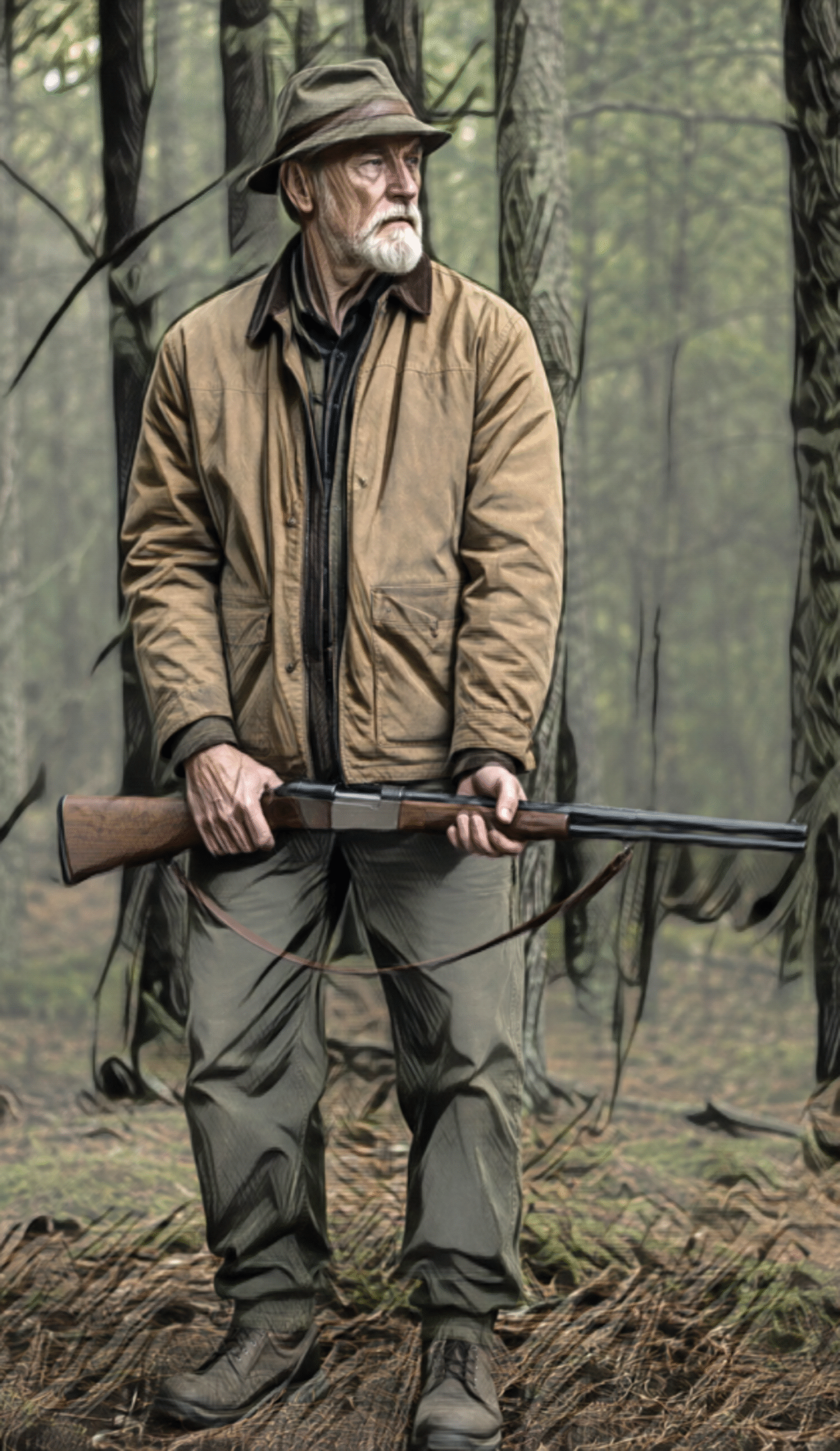
.I recently attended a police gunfight survival course (once I retired these courses are very inexpensive). The SWAT police captain showed a film of an officer shot in a traffic stop. Cars were quite apart. At least 30-ish yards? Rural remote. A man exited his car with a rifle, but the rifle was very low in his hands and arms, like the photo here. Not even hip high. Almost casual, yet all obviously dangerous.
The squad car’s dashboard camera (not body cam) films the officer started shouting “drop the gun.” But, from this low arm carry the man shot, (not even a full hip shot, the first round hitting the officer in the throat and from quite a distance! Horrible “lucky” shot. The officer quickly died at the scene. The SWAT captain stated that he learned that the man looked a lot like the officer’s father, causing the officer’s hesitation to shoot. “Relative Confusion.” Well, okay, maybe?
The film showed the man walking forward, gun very low. At first, lower than hip height. The shooter was not in any kind of shooting stance when that first round went off. Could the officer’s hesitation, his reading of the situation been about “low pose, medium pose, high pose perceived rifle shooting stances be a problem…waiting for officer’s mental picture of a rifle shooting pose is? We’ll never know. Or a resemblance to his father, or….what?
What was his perception? What is your perception of a shooting position worthy of pulling the trigger? It’s a perception thing that involves one’s shoot/don’t shoot definition. If you don’t think this perception point shouldn’t come up in training, or that it won’t come up come up in criminal, civil and military courts, you are wrong. The BIG before, during and after.
What else causes people-police-military hesitant to shoot. (This is also a military question because MANY soldiers-Marines have shared these stories too. “Looked like just a young kid (teen)”, “Fear of rules of engagement (ROE) prosecution, etc.” Friend Dan Dudziak checks in with “When I was deployed to Iraq and later Afghanistan, there were many instances of our gunners in the turrets not taking a shot, even when well within rules of engagement standards. When asked they were so fearful of JAG they didn’t want to risk it. We accidentally shot a foreign friendly nation intel officer at one time. All ROE followed, a by the rules “ clean shoot” – the foreign government flatly stated if the soldier involved ( around 20 years old at the time) ever set foot in a country with extradition they would be arrested and tried for murder.”
Here is a simple researched list of major reasons why police, soldiers, or armed citizens may hesitate to shoot an armed criminal or enemy:
1. Moral Resistance to Killing. Many people are raised not to harm or kill others, and that instinct can remain powerful even in danger.
2. Fear of Making a Mistake. They may not be completely sure the person is truly a threat or may fear hitting an innocent person.
3. Shock and Surprise. Sudden violence can mentally overwhelm people, causing hesitation or temporary freezing.
4. Fear of Legal Consequences. Police and citizens may fear lawsuits, prosecution, prison, or public backlash after a shooting. Military and police vet Loren Christensen reports: “A holdup guy shot my partner in the mouth. Thirty seconds later, I had the suspect in my sights, and for a two-second moment before I pulled the trigger, I thought, ‘I’m going to get in trouble for this.’ I pulled the trigger, anyway.”
Any officer who hesitates would certainly fall within one or more of those reasons, I can’t think of any others. Plenty enough reason for shooting if the weapon isn’t dropped, the action/reaction time difference between the suspect aligning the weapon and shoot it doesn’t give you time to analyze the situation. I’ve been in a fatal on-duty shooting and the fear of prosecution was certainly present during my confrontation. I chose to act anyway because I was in serious danger. This was in a relatively rural conservative area 45 years ago. But just in the last week we had an experienced deputy working on a USMS taskforce get convicted of negligent homicide (the jury couldn’t agree on a murder charge) for shooting an individual who had brandished a handgun and pointed it at the deputy. We have a major city in Ohio that has implemented a new use-of-force policy with a higher threshold than the Graham standard set by the USSC, and put it in place with zero training in that new policy for any of their officers. So while I’m long retired, I see a political system that is intent on complicating things for officers in these deadly force cases. Depending on the angles of the body/dash cameras, it could complicate things even more.
5. Fear of Personal Consequences. Many fear living with guilt, trauma, nightmares, or emotional damage after taking a life.
6. Confusion and Chaos. Real confrontations are often fast, noisy, dark, crowded, and difficult to interpret correctly.
7. Lack of Experience or Training. People with little realistic stress training may hesitate longer under pressure. Like for example, the aforementioned perception of needing to see an official shooting stance they are familiar with.
8. Hope for a Peaceful Outcome. Some delay shooting because they hope the suspect will surrender or stop.
9. Fear of Retaliation. They may fear return fire, harming family members nearby, and public and media retaliation later.
10. Rules and Restrictions. Soldiers and police often operate under strict rules of engagement or use-of-force policies.
11. Human Empathy. Seeing the opponent as another human being rather than simply a target can slow action.
12. Uncertainty About Timing,
13. People may struggle with deciding exactly when deadly force becomes unavoidable.
14. The “zero-to-sixty,” split second, avalanche that confounds us all.
15. Even highly trained professionals can experience hesitation on any given day. Training may reduce hesitation, but it rarely removes the human factors completely.
Read the combatives news, click here…